Sunday, 10 January 2016

As the New Year has only just arrived, many people will be trying to fulfil their resolutions. However, a lifestyle change that could prove to be just as good for you physically as attempting to go to the gym every day, and would have an even more positive effect for the earth, would be to join the 4 million existing vegetarians in the UK (or even to attempt to cut down on meat consumption).

Source - Telegraph

This decision will not only help cut shopping costs, increase individual heath and spare the life of other sentient beings, but will also help reduce the environmental impacts that i have hitherto discussed in this blog.

It has been speculated that even by decreasing your meat intake by one burger a week would have the same impact as taking your car off the road for 320 miles! Therefore, a few meatless meals to maybe ease into a more vegetarian way of eating would have an encouraging effect on the environment!

Source - Pexels

It has, however, been argued by some environmental advocates that such small changes to ones diet are failings as it creates a false justification within the public perception - only doing the right thing one seventh of the time? 


“You cannot be an environmentalist and eat animal based products. Its an addiction.” - Howard Lyman, a former cattle rancher and author of ‘Mad Cowboy’.

I have been sincerely attempting to try and cut meat from my diet, but it has undoubtedly been a struggle. Nevertheless, I have been able to reduce my consumption - and I think this will, unmistakably have been a good thing for the environment. 
I respect the views of environmental advocates such as Howard Lyman. However, I think that people shouldn’t be discouraged towards such schemes as meat free Mondays. Every little helps, and these small steps may eventually lead to people fully adopting a vegetarian lifestyle!


Saturday, 9 January 2016

I just wanted to share this fantastic infographic which elegantly sums up some of the facts and figure I have referenced throughout some of my past blog entires!

Source - Cowspiricy.com/facts

Political groups and NGOs are, in most cases silent or muted when calling the public to the harmful impacts of modern agriculture on the environment. 

This foul play has recently been put into the spot light by various environmentalists. It came to my attention though, via the hugely insightful documentary ‘Cowspiracy’. This film exposes various well respected ‘environmental’ organisations such as; Greenpeace and The Sierra Club for glossing over the true impacts of the agricultural industry and almost denying the problem altogether. 


Will Anderson, the former director of Greenpeace, has been outspoken regarding this topic. He has accused such environmental organisations for not acknowledging the impacts of agriculture and bringing it squarely into the focus of the public. Additionally, he further alludes to the fact that some parties may be subject to donations from unions that are totally for the continual growth or stasis of the agricultural system.
Recently, however a blog post was penned by a Greenpeace representative which addressed the accusations put forth in the documentary and this can be found here. I think it is interesting to read this retort and to think that Greenpeace felt obliged to try and amend the allegations. 

Kip Anderson - Director Cowspiricy
This leads me neatly on to an exchange between Kip Anderson (the director of Cowspiracy) and the Animal Agricultural Alliance (AAA). When confronted with the question, posed by Anderson, “Do you give donations to environmental groups?” The representative from the AAA is thrown off kilter and responds with trepidation - “I don’t know that I want to comment on that.”. This leads one to believe, that an unsavoury truth may be veiled from public knowledge. 


A fantastic blog I have come across whilst researching this topic is ‘Vicious Vegan’ which endeavours to explore some of the same themes as this blog, as we'll as some more abstract ones, and is well worth a read.

I am not condemning the work that these organisations do, because they have undoubtedly aided global environmental awareness, and their work is admirable. However, I do believe that more needs to be done in the way of educating the public in terms of reducing their environmental impact via simple dietary adjustments. And this is predominantly in the hands of such organisations and they have a responsibility and ability to do the right thing.

Wednesday, 6 January 2016

Happy new year! I hope you had a fantastic Christmas. Christmas is definitely a testing time for people trying to convert to vegetarianism - due to deeply entrenched traditions, a lot of which involve food - where such an undertaking may not be catered for sufficiently. Also, over the festive period I have been contemplating what is worse - to reject eating meat and thereby see it go to waste, or eating it. This may be a self justification for being unable to deny the festive favourites I have grown up enjoying or it may be a salient point worth consideration. 


If you have any opinions on the matter I would love to hear you're thoughts! 

Domesticated Turkey Farm. Source: Wikipedia


Wednesday, 16 December 2015

This past week a deal to limit the rise in global temperatures below 2 degrees has finally been agreed upon at the climate change summit in Paris, after two weeks of gruelling and intense negotiations between the parties.

Source: UN

A key notion that came from the event was the parties consensus to pursuit a  temperature increase of only 1.5 degrees Celsius. However, it has been speculated that a 1.5°C goal will require a zero level of emissions by 2030 (CNN).

The essential measures of the agreement are:

  • To peak greenhouse gas emissions as soon as possible and achieve a balance between sources and sinks of greenhouse gases in the second half of this century
  • To keep global temperature increase "well below" 2C (3.6F) and to pursue efforts to limit it to 1.5C
  • To review progress every five years, and;
  • To provide $100bn a year in climate financing for developing countries by 2020. With the commitment to further this finance in the future.


Source: BBC
These two diagrams illustrate the difference in global climate considering the complete adoption of the new agreement (top) or continuing with the business as usual scenario (bottom).

With the peak and subsequent rapid reduction of GHGs at the top of the recent climate action agenda, I am in no doubt that countries will be looking to fundamentally shift away from fossil fuels and industries with large GHGs emission signatures.

Furthermore, with the current pledges agreed at the summit the goals are deemed unreachable - so supplementary negotiations and reductions will be necessary to achieve the accepted goals.

Source: Onpurpose

One way in which the COP21 parties may eradicate these emissions and reach the intended goal, would be to take action against the agricultural sector and more specifically the rearing of livestock.

Livestock and their byproducts are accountable for at least 32,000 million tons of carbon dioxide (CO2) per year. This is the equivalent of 51% of all worldwide greenhouse gas emissions (independent).

Source: WorldWatch

As well as CO2, cows alone, produce 150 billion gallons of methane per day (IB times). As methane has a climate forcing ability up to 100 times more that of carbon dioxide within a 5 year period, and 72 times more within a 20 year period (onegreenplaet), the immediate removal of such gas would alleviate the environmental pressures associated with GHGs immediately (UN 2014).

Further to CO2 and CH4, livestock are also held accountable for 65% of all the human-related emissions of nitrous oxide, this is a greenhouse gas that has 296 times the global warming potential of carbon dioxide, and a residence time of 150 years+ (FAO - Livestocks Long Shadow).

Source: Emaze. This cartoon depicts the different green house gases and their predominant sources. 

With total emissions for agriculture projected to increase by 80% by 2050 (Nature), these factors that have taken little precedent in climate talks hitherto, now need to be addressed - with the equivalent seriousness to the danger they pose.

This is a very interesting paper that aims to answer the question; 'What if the key actors in climate change are livestock?' and expands on my brief overview in this post. I highly recommend giving it a read.


Monday, 14 December 2015

Deforestation, especially in the Amazon is a huge topic that has received a great deal of media attention. The earths tropical rainforests are regarded as the planets lungs, and the destruction therefore effects us all - this makes it an excellent case study to illustrate the environmental impacts associated with cattle ranching. I want to talk in this final post about the amazon, about one more impact - biodiversity, and then conclude this Amazonian chapter of my blog by summarising the efforts in addressing the issues underlined in past posts.

Source: 14 figures on environmental conservation

Biodiversity

The Pantanal region of South America is renowned as a wildlife hotspot and a pristine ecosystem comprised of various native species of flora and fauna. 

The Pantanal - Source

The Pantanal has been impacted by non sustainable ‘predatory’ socio-economic development. With the major economic activity of cattle ranching being at the centre of the problem (Alho 2011).

Removal of forest simply equals loss of habitat, shelter and food. That is the underlying reality and something that policy makers and individuals hastily grabbing land do not consider as relevant.

Habitat isolation and fragmentation studied in the tropical rainforest of costa rica has also been indicative of a decrease in the abundance and compositional of wildlife (Broadbent et al. 2012). As biological corridors are eradicated and rendering species with little to no territory and putting them under ecological stress.

The introduction of environmental pollutants associated with agriculture, such as pesticides and herbicides additionally have an effect, these agents can affect non-pest species that are simply considered ‘collateral damage’ due to agricultural necessity.

Furthermore, with the invasion of human development comes the invasion of other species, who may colonise degraded land or outcompete native biology in the proximal rainforests. 

The large scale removal of the biological melting pot that is the rainforest with soy fields instantly and dramatically reduces the biodiversity from a very high to extremely low index. Look the these two images and decide for yourself what looks to be more biologically rich?

After 
Before


Finally, illegal hunting also threatens the native wildlife. Predators may attack the introduced cattle and be illegally culled by ranchers to protect the herd. I know this is a particular problem in some parts of the US, where cattle use public land for pasture and there have been cases of farmers killing wolves bears mountain lions and cougars to protect the livestock - illegally. A controversial example of this was the decision to cull the wedge wolfpack because of their increased consumption of beef in washington state - find the full article here.

It is believed that up to137 plant, animal and insect species are lost every day due to rainforest destruction (Rainforest statistics and facts -Save the amazon).


LEAD approach

The UN, Livestock, Environment and Development group are attempting to address the deforestation situation in its programme entitled: ‘Improved decision-making in addressing livestock’s role in the deforestation process’, with a particular focus in the Latin American region.

FAO


The initiative has three primary objectives, which are:

‘Aiming to understanding and therefore predict, the trends of future deforestation processes in the region.’

‘Developing benefit-sharing mechanisms at farm and community levels for biodiversity and carbon sequestration services as incentives to produce global environmental benefits resulting from integrated ecosystems management approach.’

‘Preparing policy guidelines for the sustainable intensification of livestock aimed to enhance biodiversity and mitigate the impacts of livestock-induced land use change.’ FAO, United Nations.

I personally believe that these goals are well intended. Although, simply predicting the future trend of expansion is not addressing the issue but merely monitoring it. Furthermore, I have already discussed my thoughts on intensifying livestock practices in order to ‘reduce’ the impact and I believe it to be a false justification and a poor mitigation technique in the place of something concrete to tackle the wider picture.

However, developing benefit sharing mechanisms at the grass roots level, will be in my opinion beneficial. This will provide the environmental education that is lacking in some regions and may even filter through to give a sense of environmental conciseness to the deforestation protagonists.

I think that policies and laws need to be enforced regarding deforestation before it is too late, the natural world must soon be put in front of economic development or it will be a thing of the past.

These shocking advertisements attempt to reveal the true horror of deforestation.

Source: GreenPlanet


Thursday, 10 December 2015

In my last post I discussed cattle ranching and the large scale deforestation it has been associated with. After reviewing the literature, I believe it is clearly apparent that these practises are posing a great threat to our global environment, and are by far, the main threat to tropical rainforests.

Some of the impacts of deforestation have already discussed within this blog, for example: soil/land degradation and water pollution. These are problems ubiquitous with cattle ranching. Nevertheless, there are some impacts that are magnified due to the association with rainforests - and these are what I want to discuss. 

Green House Emissions

The WWF estimate that cattle ranching alone is accountable for the release of 340 million tons of carbon to the atmosphere per year, which is the equivalent to 3.4% of total global emissions. With an area the size of india being cleared over the last 25 years (approximately 13.2 million ha per year!!) it is easy to see that this is rivalling even the emissions from burning fossil fuels in cars!


A report in ‘Climate Change’ by Mercedes M. C. Bustamante et al. in 2012 highlights the main sources of GHGs are from: 1. The portion of deforestation resulting in pasture establishment and subsequent burning of felled vegetation, 2. pasture burning and 3. bovine enteric fermentation (animal produced GHGs). 
This investigation also concluded that total emissions related to the Amazon ranged from 499 to 775 Mt CO2eq. I think this study is a commendable effort in trying to calculate the emission figures but the range of results suggests a large margin of error.

Furthermore, an investigation into increased deforestation fire activity in the Amazon conducted by Morton et al. in 2008 concluded no uniform relationship between the presence of fires and detections in CO2, this does not however state that burning the Amazon has no impact on CO2 levels, but rather indicates a complex feedback process that govern the associated GHG output. This is a spectacularly difficult area of investigation to negotiate and deliver a precise result.

There are further, secondary sources of emission that I believe also need to be taken into account. For example, the paper reveals that emissions from producing the energy for transportation and refrigeration of the meat is not considered - but in reality this surely should be a factor, considering these outputs would not be required given the absence of cattle in the first place?

In addition a paper by Cederberg et al. in 2011 explained that the carbon footprint of beef produced on newly deforested land is estimated at more than 700 kg CO2eq per kg carcass weight because of the loss of the CO2 intake by the plant life, amplifying the carbon footprint considerably. 

Fire Clearing

During the dry season, Brazil often makes news headlines across the globe because of raging fires, a practice of agricultural management for opening rudimentary subsistence plantations (slash-and-burn agriculture) and cattle pastures (FAO).

Source: Sustainable works

In the Brazilian Amazon, this is an especially dangerous procedure. Fires can easily spread into forests adjacent to the treated agricultural land. 
Moreover, between 2000 and 2002, forest hotspots almost tripled from 16,000 to almost 42,000 per year (Barreto et al. 2005). Additionally it has been calculated that fires associated with deforestation contributed 67 Tg C/yr to the earths atmosphere. (17 and 50 Tg C/yr from conversion to cropland and pasture, respectively) while conversion of existing cattle pasture to cropland contributed 17 Tg C/yr and the maintenance of pastures; 6 Tg C/yr (DeFries et al. 2008). Which relates back to the larger carbon footprint of beef on newly cleared land previously discussed.

So in conclusion, these two factors are considerably exacerbated due to their location in the rainforest and pose an unparalleled threat to the biome, a fantastic article addressing the same issues can be found here which I highly recommend reading. But what is being done and what is the ecological response?


Tuesday, 1 December 2015

Habitat conversion or more commonly ‘deforestation’ is severely advanced due to cattle ranching, this practise is the number one culprit of deforestation in every Amazon country.
Despite attempts to conserve and protect these pristine habitats - that are so important in terms of ecology and biodiversity - the designation of these sites as ‘protected’ has not been honoured, and local governments have failed in stopping expansion into these areas. This Blog looks into the idea of pristine habitat conservation and is well worth a read.

An example of pristine rainforest - WFN

The World Bank has calculated that approximately 91% of Amazonian deforestation is attributed to agriculture, and has been the “direct driver of roughly 80% of tropical deforestation” (Kissinger et al 2012). 

Pro-velopement 

This report does however, concede that industrial activities bear the main responsibility with regards to global deforestation. But on the other hand highlights that these drivers vary on a regional scale - with cattle ranching being the predominant cause in Latin America.

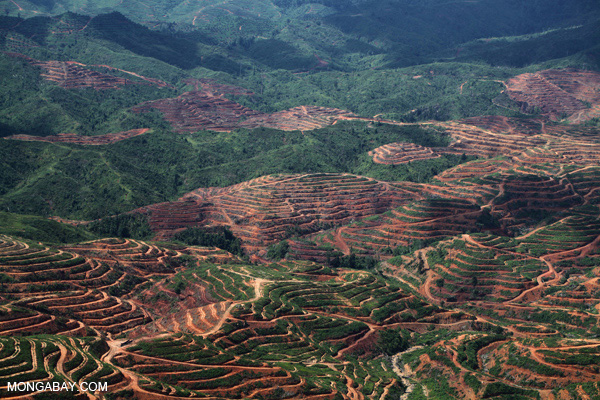
Latin America is of particular importance as this region experiences the largest net loss of forested areas, converting this land type into pasture sites of cattle - often irrespective of soil, climate and topography (Laurence et al., 2004).

Monga Bay

Furthermore, in Central America forest area has been cut dramatically, by over 40% in the last 40 years (Roebeling et al 2010). Which is seen to be in very close relationship to the rapid increase in pasture land and cattle population over the same time period…

Source - Guardian

Finally, I wanted to discuss a paper by Cohn et al 2014, that I found whilst investigating this topic, that suggests Brazil, who owns approximately 88% of the  total amazonian herd (WWF), may in fact be able to abate GHG emissions by intensifying their ranching practices in order to spare land from deforestation. This would be implemented by taxing cattle on conventional pastures and subsidising farmers who adopted intensive or semi intensive practices. 
Personally, I believe that this is by no means a solution. I think that this only adds to the problem. I have already discussed the problems associated with intensive pastoral farming. If these practices were to be put into place in such close proximity to a pristine and precious environment then it could theoretically do as much damage as deforestation in the first place. I think quasi-solutions like this are farfetched and deserve no acknowledgement as serious suggestions - especially when cutting the desire for meat is such a simple resolution.The paper can be found here and I’d be interested to hear you’re thoughts on it!

But what harm does this deforestation do to the environment? Well, this is a question I intend to answer in a following post. So stay tuned!


Sunday, 22 November 2015

So this is my seventh blog post concerning the environmental impacts of intensive cattle farming, and I just wanted to say that the inspiration for this blog and what really triggered my interest in this topic was a documentary called ‘Cowspiracy' that I watched a couple of weeks before beginning and In my opinion, it is a fantastic documentary, and well worth a watch.

Now, since watching this film I have been aware of the fact, that cattle - and more specifically the huge human hankering for meat - is ruining our environment. That is why, for now just under two months I have been attempting to become vegetarian - however, this has been harder than I thought, and I have surrendered to the odd burger when out with friends, and found it exceptionally difficult to stay within the rules when shopping on a student budget.

Nevertheless, it has been estimated that each day, a person who eats a vegan diet saves 1,100 gallons of water, 45 pounds of grain, 30sq ft of forested land, 20lbs CO2 equivalent, and one animal’s life (Scarborough et al. 2014). This is a startling set of figures, and if this can be achieved by cutting out our meat consumption it is something I believe we should all sincerely attempt to adopt.

Figures 1 & 2 from 'Shrink that footprint'

  These figures from ‘Shrink that footprint’ illustrate the carbon footprints of various diet choices, the FAO published the fact that 18% of greenhouse gas emissions result from livestock, so it is clear that cutting meat (especially beef), from ones diet can really alleviate the environmental ramifications that are associated.

But, it is not only the impacts on the earth that need to be evaluated when considering a meat free diet. ‘Hunger is caused by poverty and inequality, not scarcity’. With the human population expected to peak at 10 billion in 2050, it is going to be necessary to bridge the growing dichotomy between food and the poverty stricken.

Source: http://food-inequality.weebly.com


It is widely accepted that we currently produce over one and a half times enough food to feed everyone on the planet (Seufert et al. 2010), but unfortunately most of this food is being fed to cattle which are not then consumed by the people who are going hungry but the glutinous and greedy developed citizens of the world which is totally unjust to anyone I discuss this topic with, and something that is not normally considered.
This is why a shift to agroecology has been championed by the UN (Eric Holt-Giménez. 2012), to enable poor famers with the tools required to sustainably produce the required resources in areas of poverty.

Agroecology in Burkina Faso. Source: http://www.amurt.net/agroecology-in-burkina-faso/


I think it is going to be important in the future to therefore assess the agricultural yield in terms of 'humans nourished' rather than the current feed to edible food conversion ratios favoured by the 'developed' world. This is tackled successfully in this report by Cassidy et al. (2013).

Source: http://africanleadership.co.uk/blog/?p=3023


So, to conclude, eliminating meat and primarily beef from your diet will undoubtedly have a positive effect on the environment, and would even relieve human poverty. So why doesn't everyone do something about it. Ignorance, laziness or greed? To solve these environmental and social dilemmas we must educate, end inequality and begin to adopt the lifestyles we advocate rather than continually ignoring what has been, and continues to be, so clearly indicated to us.

Saturday, 14 November 2015

Within this post I want to explore some of the aquatic impacts associated with the poor waste mismanagement that I have hitherto discussed.

Cattle faeces has been calculated to contain approximately 0.79% ammonia, 0.43% potassium and most crucially - 0.43% phosphorous (Bond et al. 2014.), which is singled out as the ‘primary biological limiting factor’ for most aquatic species.

Stream, lake and riparian environments may all undergo the process of eutrophication when subjected to such nutrient rich inundation of animal waste. The response of eutrophication or ‘hypertrophication’ most commonly causes the sudden explosion of large algal blooms in the ecosystem, that can even be seen from space in the most extreme cases!

Algal bloom in Lake Erie

These algal blooms have a very unfavourable cascade effect on the remaining part of the ecosystem, ‘algal mats’ can cause the lower parts of the water column to become shaded and shift previously favourable photic zones into darkness, rendering the environment unfit for photosynthesis and hence eradicating some plant species. This was investigated by Croel (et al. 2011) who investigated the effects of cattle waste on Californian vernal pool plants in experimental mesocosms’ and saw a sharp reduction in species richness and abundance.

Furthermore, such blooms cause the aquatic system to become deleted in oxygen - this ‘anoxia’ is caused by increased respiratory activity by the algae and eventually depletes the waters oxygen reservoir.
As well as anoxia, the turbidity - or water transparency is severely effected by the injection of waste into the system.

These two factors lead to acutely adverse effects on species diversity, an interesting study I uncovered that relates to this, is a paper by Schmutzer (et al. 2008) that explores the impact of cattle waste on amphibian larvae on the Cumberland Plateau of Tennessee, U.S.A. In general, the species richness and diversity of amphibian larvae are seen to be considerably greater in wetlands without cattle, which I can imagine you don't find especially shocking. The associated poor conditions also cause the extermination of vast fish stocks, as there food sources have been lost and the anoxic conditions suffocate them in the water.


These ecosystem responses are experienced naturally in aquatic ecosystems, but are considered to be exacerbated tremendously by the poor waste management from intensive animal farming that I have already explained. In my opinion I think it is unacceptable to knowingly inflict this stress on such fragile habitats, what do you think of the situation? Please let me know. Thanks